How 60 Students Organized a Virtual Republic Day Celebration: A Guide for Educators
A practical framework for student-led virtual events that build leadership, confidence, and digital skills
What happens when you hand over a national celebration to students as young as Class 5?
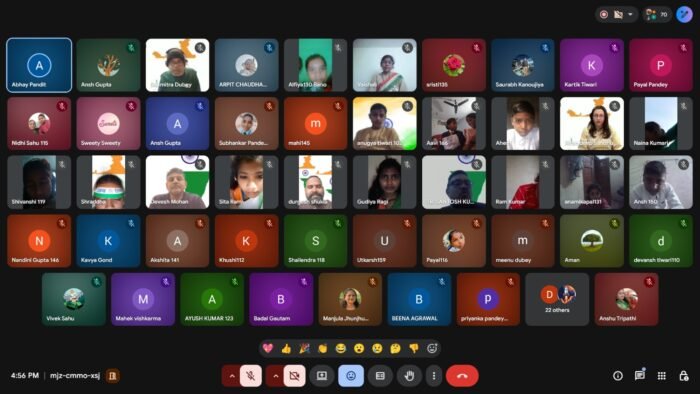
On 26th January 2025, GBTC Trust’s virtual Republic Day celebration wasn’t for students—it was by students. Sixty young leaders, from Class 5 to first-year college, planned and executed the entire event. Adults stepped into mentorship roles, offering guidance without taking over.
Our Chief Guest, Ms. Manjula Jhunjhunwala, captured it perfectly:
“A well-coordinated and participated program—very impressive. What truly impressed me was the focus on values. Each student who presented today knew the true meaning of why we are celebrating Republic Day.”
Here’s how we did it—and how you can replicate this model.
The Planning Process: 6 Virtual Meetings
Our main planners, Anshu Tripathi and Ansh Gupta, led the coordination over six virtual planning meetings before the event day using Google Meet. We chose this platform because it works reliably in rural India where connectivity is often inconsistent—it performs well on lower bandwidths, works on basic smartphones, and is free. Technology should be a bridge, not a barrier.
These meetings gave the team time to assign roles, practice transitions, troubleshoot technical issues, and build confidence together.
The Youth Team:
MCs: Ansh Gupta, Vaishali Pandey, Saurabh Kanaujiya, Srishti Yadav, Subhankar Pandey, and Aarya Yadav hosted different segments of the celebration
Activity Coordinators: Aman Pandey, Akanksha Gupta, Shivam, Gudiya, and Payal Pandey led interactive sessions and performances
Technical & Creative Support: Students managed screen sharing, participant coordination, and content compilation
Every student had a defined role with clear ownership. No one was merely “participating”—everyone was contributing.
Pre-Event Competitions: Building Momentum Virtually
Days before the main celebration, we held two competitions:
- Republic Day Dress Competition
- Picture Drawing Competition
All submissions were made virtually, then compiled by the student organizers. This approach achieved two things: it built excitement leading up to the event, and it gave students practice managing digital submissions and content curation.
Three Pillars of Student-Led Events
1. Distributed Responsibility
Instead of one or two student “helpers,” we distributed meaningful roles across the entire team. Each person owned their segment completely.
2. Layered Mentorship
Senior students mentored junior students. Teachers provided backup, not control. College-level youth leaders guided school students, creating peer learning relationships.
3. Genuine Trust
When students know they’re genuinely trusted with responsibility, they rise to meet it. When they know failure won’t result in blame, they take creative risks.
As Ansh Gupta, one of the main planners and MCs, reflected:
“Working closely with senior mentors, teachers, and fellow students helped me understand the importance of trust in teamwork, communication, and responsibility. I learned how trust grows when guidance, openness, and support are consistently present. On the day of the celebration, I felt happiness, motivation, and achievement. This journey taught me how trust, teamwork, and mentorship can create a positive and empowering environment for growth.”
A Simple Framework to Replicate This
2-3 weeks before: Identify your youth leadership team across age groups. Define roles clearly. Establish communication channels (we use WhatsApp).
1-2 weeks before: Assign content creation. Run pre-event competitions with virtual submissions. Create a run-of-show document.
Final week: Hold planning meetings (we did 6). Conduct technical rehearsals. Let students troubleshoot problems themselves.
Event day: Technical team arrives 30 minutes early. Trust the preparation. Celebrate contributions publicly.
After: Gather student reflections. Document the experience.
The Bigger Picture
The Constitution of India promises equality. Virtual platforms can help deliver it.
A student in a rural area can host an event attended by distinguished guests. A young person from an under-resourced community can develop the same leadership skills as their urban peers. That’s what GBTC Trust works toward every day—using technology to create equality of opportunity.
Get Involved
GBTC Trust builds resilient, confident youth for India 2047 through education and technology. If your organization shares this vision, we invite you to explore partnership opportunities.
Visit gbtctrust.org to learn more and support our mission.
Share this post if you believe in youth-led learning.