3 Steps Any School Can Take to Fight Plastic Waste — and Why NEP 2020 Makes It Non-Negotiable
Discover how the Sagar Mitra model helps schools implement NEP 2020 environment education through a simple 3-step student-led plastic waste programme.
By : Kiran deep Sandhu | GBTC Trust | www.gbtctrust.org
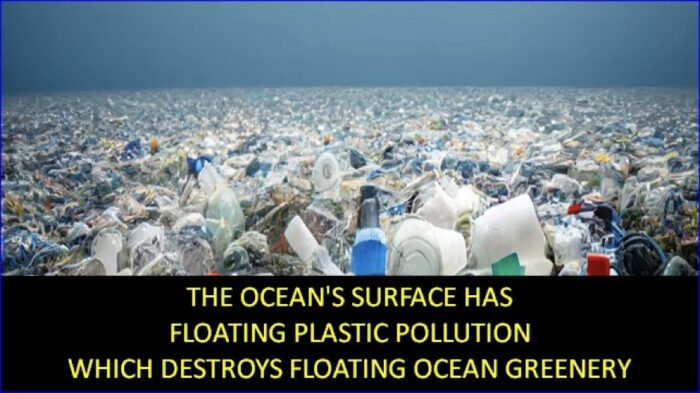
The Plastic Pollution on the surface is preventing Photosynthesis in Ocean Greenery,
Pick up a globe. Or better still, show your students one.
Ask them: “How much of this planet is land?” Most will guess more than half. Then show them the answer.
Only 29% of Earth is land. The other 71% is ocean. And here is the fact that changes everything: that 71% of ocean produces approximately 70% of the oxygen we breathe — not from forests on land, but from the green that lives on the surface of the water. Phytoplankton, seagrass, kelp. Life that most of us never see, never think about, and are actively destroying.
“We are damaging the very source of the air our children breathe — and most school curricula have not caught up with that reality.”
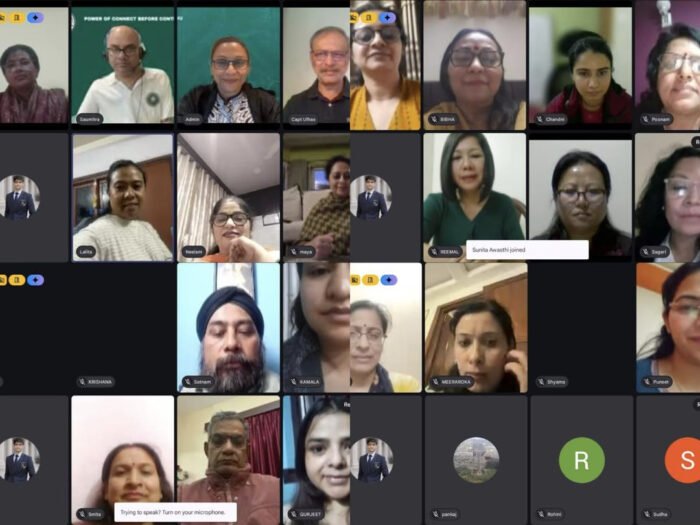
This is exactly what 105 educators from India and Nepal confronted in a recent professional development session organised by GBTC Trust. It was not a lecture. It was a reckoning — followed by something practical.
Why Schools Hold the Answer to the Plastic Crisis
Children do not just learn inside classrooms. They go home. They influence parents. They grow into the citizens who will either address this crisis — or deepen it.
The National Education Policy 2020 already recognises this. NEP 2020 Section 11.8 explicitly mandates environment education that covers 4 sub-headings:
- Scientific Temper and understanding the Global Climate Change Crisis
- Spiritual Values including Karuna (Compassion) and Ahimsa (Non-Violence)
- Community Engagement so that students do actual tasks that have actual ground results and not laboratory or art-model levels of engagement
- Global Citizenship – adding the larger background of Global Responsibility to National Responsibilities
In detailing the 4 sub-headings of Section 11.8, NEP also refers to:
- Waste management, climate change, and pollution
- Value-based education with Service learning
- Universal human values — truth & peace
- Alignment with the 17 United Nations Sustainable Development Goals (SDGs)
Plastic waste management projects in schools connects directly to SDG 15 (Life on Land), SDG 14 (Life Below Water), SDG 13 (Climate Action), SDG 12 (Responsible Consumption and Production), SDG 11 (Sustainable Cities and Communities), SDG 4 (Quality Education), and SDG 17 (Partnerships for the Goals). This is not extra-curricular. This is exactly what NEP 2020 asks schools to do.
Yet most schools are still waiting for someone to show them how. The Sagar Mitra model is that answer.
What Is Sagar Mitra — and Why Does It Work in Schools?
Sagar Mitra Abhiyan (meaning “Friends of the Oceans”) is a student-centred action program designed to bring plastic waste management directly into the school ecosystem. It does not require new infrastructure, large budgets, or external experts running the show. It requires only three steps — and the commitment of a school willing to lead.
The programme was designed with one non-negotiable safety rule at its core: children never collect plastic waste from outside their own home. Every step stays within a space that is safe, familiar, and already under parental supervision.
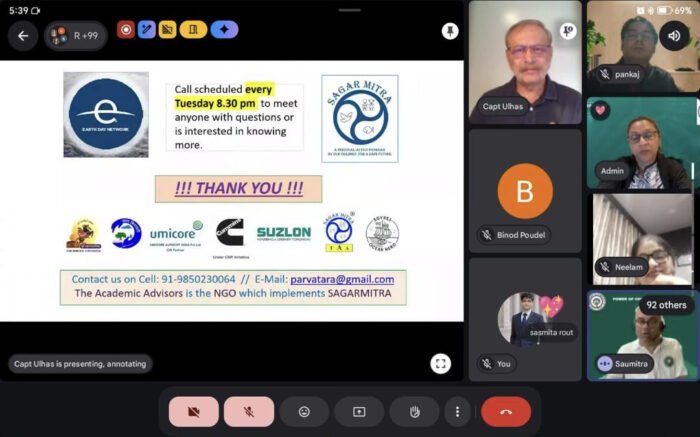
Captain Ulhas presenting Sagar Mitra model to educators during the GBTC Trust professional development session.
The 3-Step Sagar Mitra Model: Simple Enough for Any School
Step 1 — Build Awareness, Start at Home
Students learn to identify the different types of plastic — what can be recycled, what cannot, and why it matters. The focus is intentionally on the home environment. This is not about cleaning up a beach. It is about changing a habit in the most accessible place: the family household.
Step 2 — Collect, Clean, and Separate
Families in India already have a system for setting aside old newspapers and paper for recycling — the raddi. Sagar Mitra uses this existing habit as a bridge. Students are taught to do the same with waste plastic: keep it clean, dry, and empty, and set it aside separately. One familiar habit. One new addition. No disruption.
Step 3 — Bring It to School Once a Month
Once a month, students bring the clean waste plastic they have collected at home to school. The school becomes the collection point, the community anchor, and the place where the lesson becomes visible and real. The bag fills up. The data shows impact. The behaviour sticks.
Three steps. No expensive infrastructure. No complicated systems. One habit, one bag, and a school prepared to lead the way.
What Educators Shared — Real Ideas from the Room
During the GBTC Trust session, something unexpected happened. Educators did not just listen. They started sharing what was already happening in their own communities.
One group described how plastic waste in their area was being converted into bricks — a building material that does not decompose, does not leach into groundwater, and gives discarded plastic a second, useful life. Low cost. High impact. Entirely replicable.
Others spoke about educators themselves sorting and collecting plastic at home before bringing it to the session — modelling the behaviour they intended to teach. Teachers as practitioners first, messengers second.
These were not hypothetical ideas from a slide deck. These were things people in the room were already doing, or had seen working in their towns and villages. The knowledge existed. What was missing was a structured way to bring it into schools consistently and at scale.
5 Ways to Bring This Into Your Classroom Right Now
- Start with the atlas. Show students a globe or world map. Ask them to estimate how much is land versus ocean. Then reveal the 29-71 split — and the fact that the ocean produces most of our oxygen. Let the surprise drive the conversation.
- Run the three-step model as a one-month classroom project. Create a visible collection point, a simple tracker on the board, and a small recognition when the first bag fills up.
- Connect it to the SDGs. Plastic waste links to SDG 14 (Life Below Water), SDG 12 (Responsible Consumption), SDG 11 (Sustainable Cities) and SDG 17 (Partnerships for the Goals). Give students the global language for what they are doing locally.
- Make students the teachers at home. The Sagar Mitra model works because children carry the learning home. When they own the project, families follow. Parents sort differently because their child asked them to.
- Invite community voices in. If local businesses or community groups are already doing something with recycled plastic — like making bricks — invite them to speak. Real examples are more powerful than any textbook.
How GBTC Trust Can Support Your School
GBTC Trust runs monthly professional development sessions for educators across India and Nepal — building not just teaching skills, but the mindset and tools to create responsible, globally conscious citizens.
📅 GBTC Trust Monthly Professional Development Sessions
Every last Friday of the month | 5:00 – 6:00 pm IST | Open to educators across India and Nepal
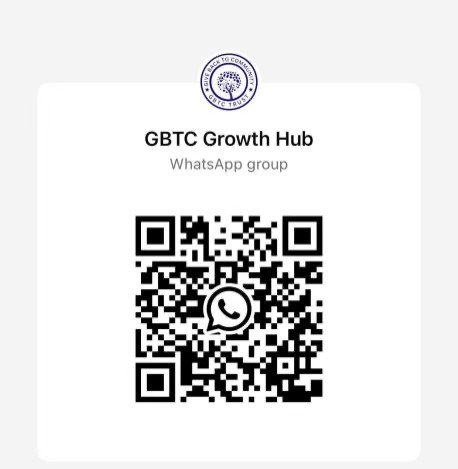
Scan the QR code below to join the GBTC Growth Hub WhatsApp group and stay updated on upcoming sessions.
Want to Implement Sagar Mitra in Your School?
Meet the Sagar Mitra Team:
Capt Ulhas Bodhankar is a Senior Advisor with Sagar Mitra Abhiyan and a driving force in this initiative. A veteran who served the Nation on our borders, now on a mission to ensure that the next generation understands the ocean not as a distant geography lesson, but as the living system that sustains all life on Earth.
Vinod Bodhankar is the Joint Founder Director,
SagarMitra Abhiyaan ,TAA. Founder-Director, Vishwasanskruti Ashram, Jt Coordinator, Aao Nadi Ko Jaane (Know Our River), Jala-Naayak, Water Literacy Centre, YASHADA, Convenor, IPRBC, India Peninsular River Basin Council, Jalbiradari
Sagar Mitra is implemented by The Academic Advisors, the NGO behind the program & by the JALBIRADARI Network. A weekly open call is held every Tuesday at 8:30 pm for anyone with questions or genuine interest in bringing the program to their school. No appointment needed – just show up with your questions.
Reach us:
📞 Cell: +91-9822302426, +91-9850230064
📧 Email: captub@gmail.com, parvatara@gmail.com
For schools that want to go further, GBTC Trust is working with institutions interested in running the full Sagar Mitra initiative. The implementation pathway includes:
- An initial orientation call with school stakeholders
- Structured teacher training — 1 foundation session + 3 follow-up sessions over four weeks
- Guidance in setting up the collection system within the school
- A three-month implementation cycle
- Three refinement sessions after the initial cycle to embed and improve the programme
If your school wants to move from awareness to action on plastic waste, ocean conservation, and NEP 2020-aligned environment education — GBTC Trust would love to work with you.
📩 Email us to get started: Admin@gbtctrust.org
🌐 Visit us at: www.gbtctrust.org
Let’s bring Sagar Mitra — and responsible citizenship — to your school.